





Leather vs Nylon Tool Belts: Which is Better for the Job?
Leather tool belts offer more structure, long-term durability, and a custom break-in fit. Nylon belts are lighter, more flexible from day one, and better suited to trades where load isn't the primary factor. The right choice depends on how you work, what you carry, and how long you need the gear to last.
Your tool belt is part of your uniform. You put it on before you clock in, and you don’t take it off until the truck is loaded. It rides with you for ten hours, hauls your weight, and gets reached into a few thousand times a day. So when you’re picking between leather and nylon, “which one is better” isn’t really the question.
The question is which one is better for the way you work.
Both have a place on a jobsite. Both can be built well or built cheap. But they don’t carry the same, they don’t wear the same, and they don’t end up in the same condition five years in.
Here’s how to think about it before you open your wallet.
Leather Tool Belts: Structure That Earns Its Keep
Leather has been on jobsites for a reason, and it’s not nostalgia.
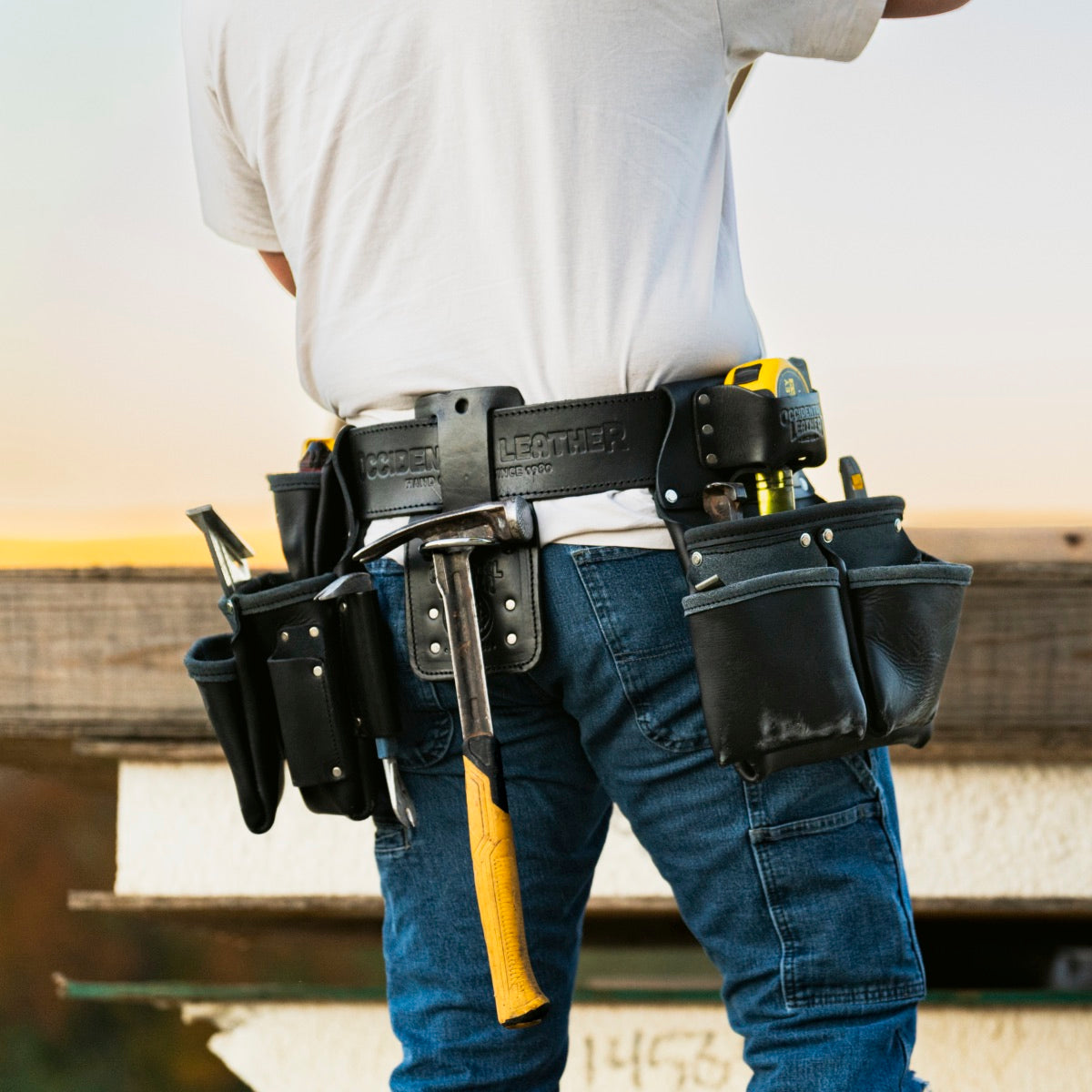
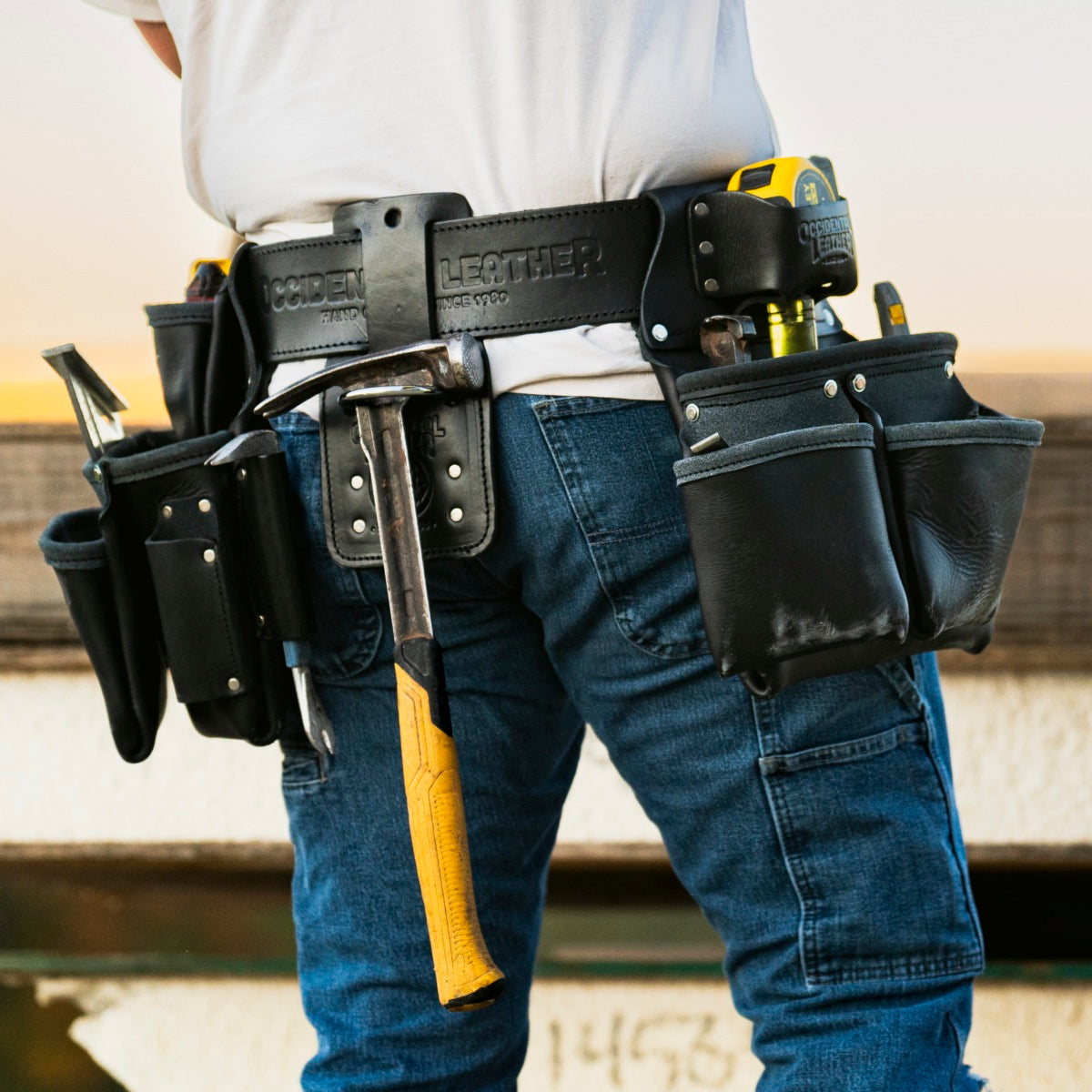
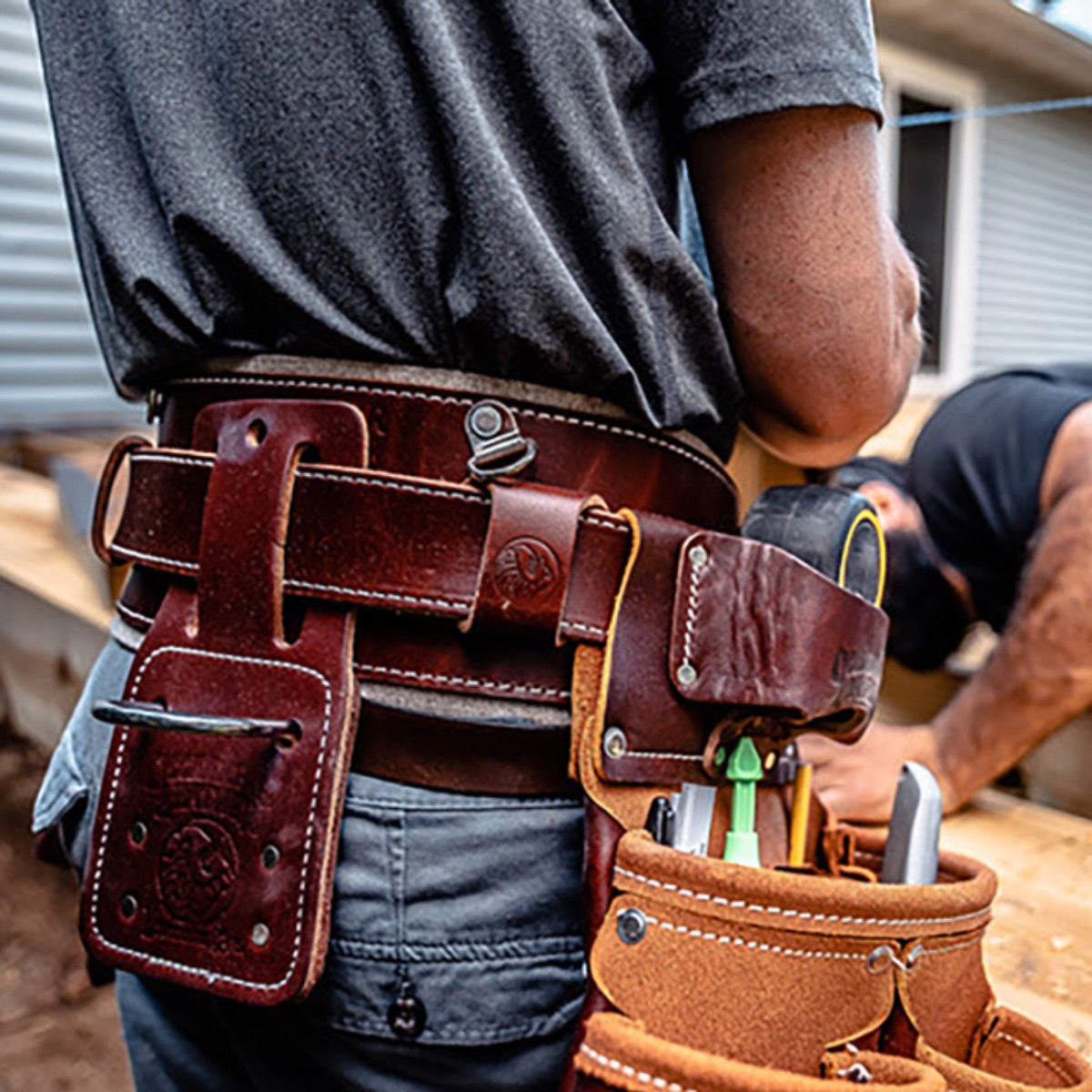
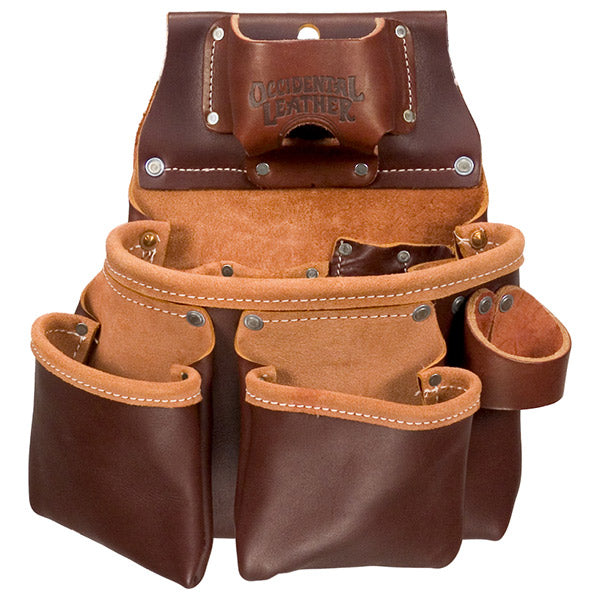
A well-built leather tool belt holds its shape. The bags stay open. The pockets don’t fold in on themselves when you’re loaded down with fasteners. The belt breaks in over the first few weeks and starts to settle to how you stand, how you reach, how you carry. That kind of fit doesn’t happen with disposable gear.
When you’re pulling the same speed square out of the same pocket four hundred times before lunch, structure matters.
Built right, leather takes the abuse. Framing lumber leaning against you all day. Ladders. Concrete dust. Fasteners scraping the front of the bag every time you reach in. It’ll show wear, and that’s the point. The marks are evidence that the belt did its job.
A good leather belt isn’t supposed to look brand new forever. If it does, either it’s not being used or something’s off. The scuffs, the scrapes, and the discoloring are signs that the belt is becoming yours.
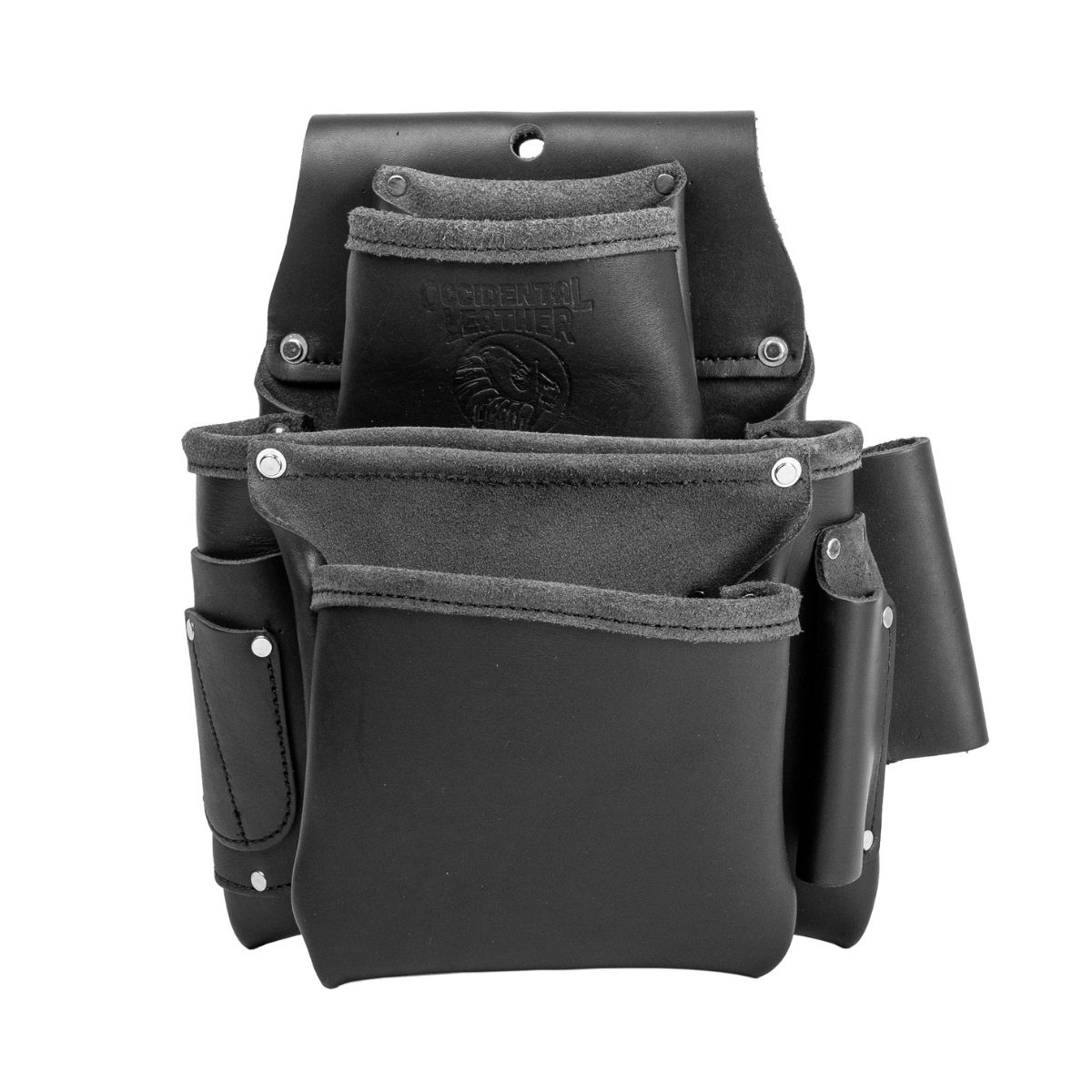
The trade-off is honest. Leather weighs more. It’s stiff the first week or two. You have to put time on it before it feels like yours. For a lot of guys, that break-in is exactly why they buy leather in the first place. Once it’s molded, it’s molded to you. See how that plays out with our 5080DB Setup.
Nylon Tool Belts: Lighter, Faster Out of the Box
Nylon tool belts have their own case to make.
It’s lighter on average. It flexes from day one. It tends to do alright in wet conditions, and for trades that don’t need to carry a heavy load, the reduced weight is real.
If you’re climbing all day, moving fast across a site, or running lighter-duty work where you’re not loaded down with heavy hand tools, nylon can be the right call.
But not every nylon belt is the same.
Cheaper nylon sags. The pockets collapse the second you put weight in them. The bags lose their shape, the tools shift around, and your organized setup turns into a junk drawer with a buckle. By month six the seams start fraying and the whole thing feels tired.
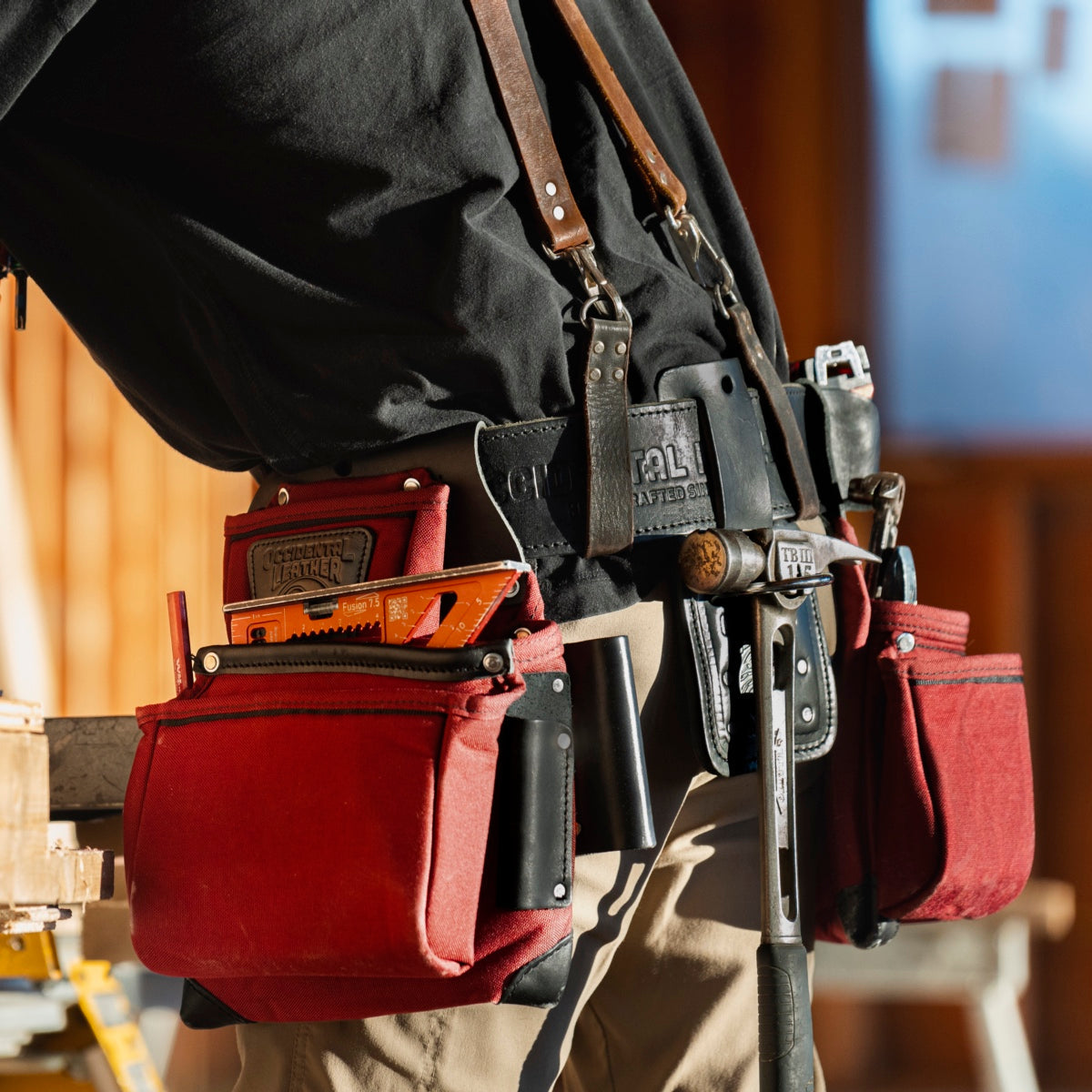
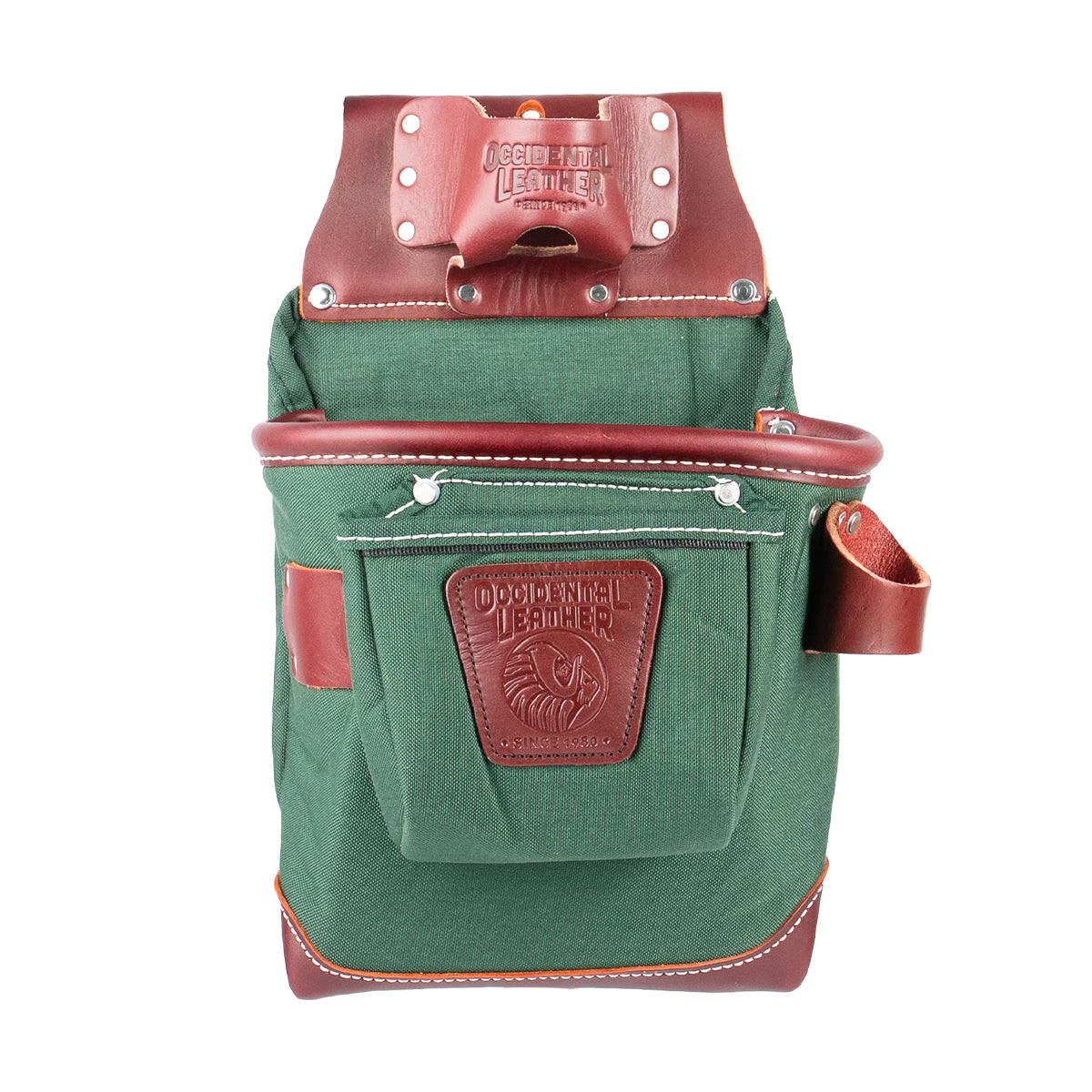
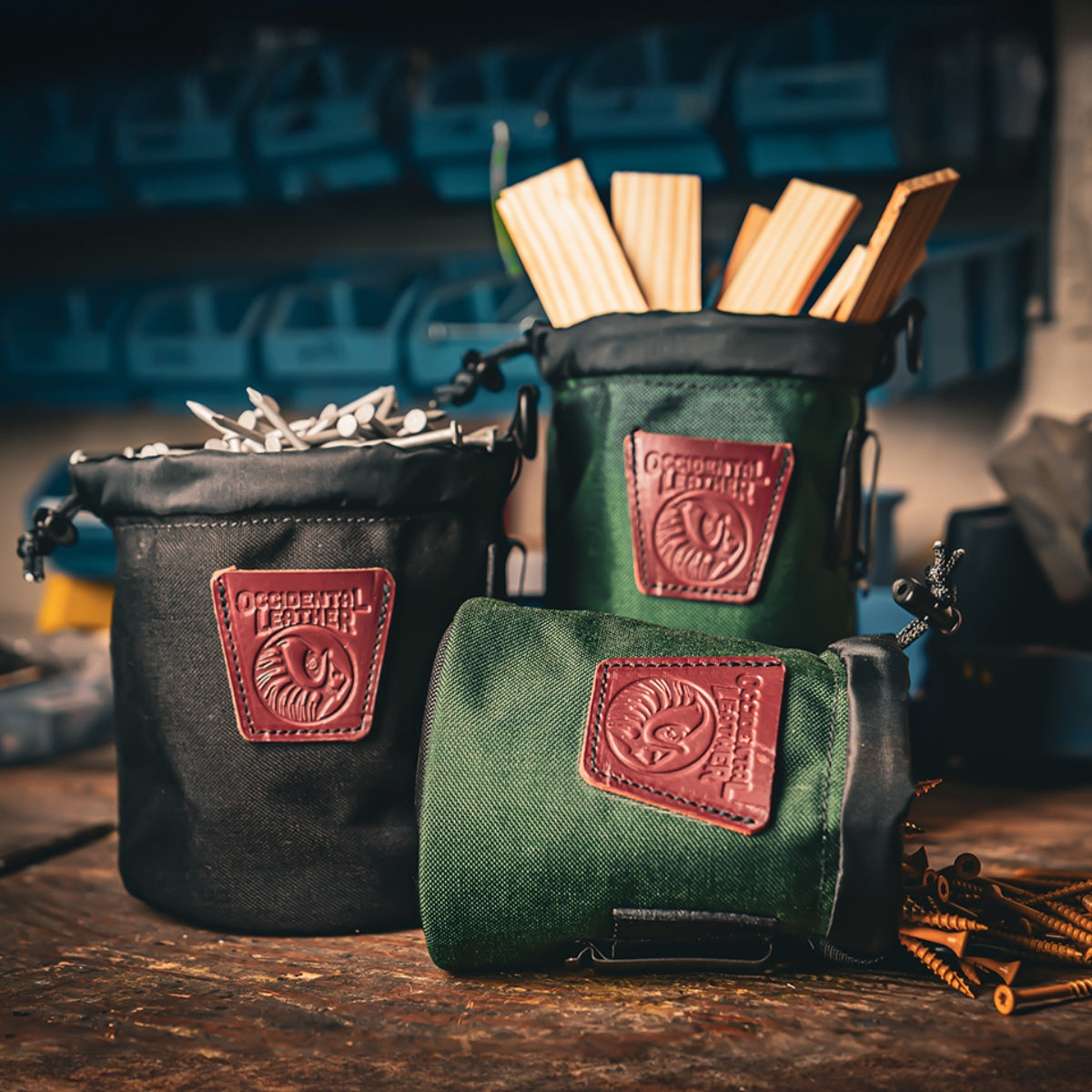
Better, more durable nylon is structured at the bags and, for Occidental, nylon is often paired with leather where it counts. That will solve a lot of those mentioned shortcomings. That’s a different category from the “entry-level” gear, and it deserves to be talked about differently.
Which One Lasts Longer?
For most pros wearing a belt every day, leather wins on long-term durability. It holds structure, takes years of use when you take care of it, and ages in a way that makes sense for work gear.
Nylon can last too. Heavy-duty nylon with proper reinforcement gets a long run. Lighter-weight nylon, less so. That’s where you see the early fraying, the sagging pockets, and the seams pulling apart at the bag mounts.
The honest answer is build quality decides more than material.
Cheap leather is still cheap. Cheap nylon is still cheap. You can make junk out of almost anything if you try.
Look at the stitching. Look at the hardware. Look at the rivets and the bag attachment points. Look at where the bags meet the belt and what’s reinforcing that joint. Look at whether the tool holders are made for daily reach or just made to look nice on a store shelf. A tool belt needs to survive loaded use, not just a product listing.
Comfort Isn’t Just Weight
The assumption is that nylon is more comfortable because it weighs less. Sometimes that’s true. A lot of the time it isn’t.
Comfort comes from how the load is distributed. How the belt rides on your hips. Where the bags sit relative to your reach. Whether the setup matches the work you actually do. A heavier belt that’s balanced right will feel better at the end of the day than a light belt that’s shifting around every time you bend down.
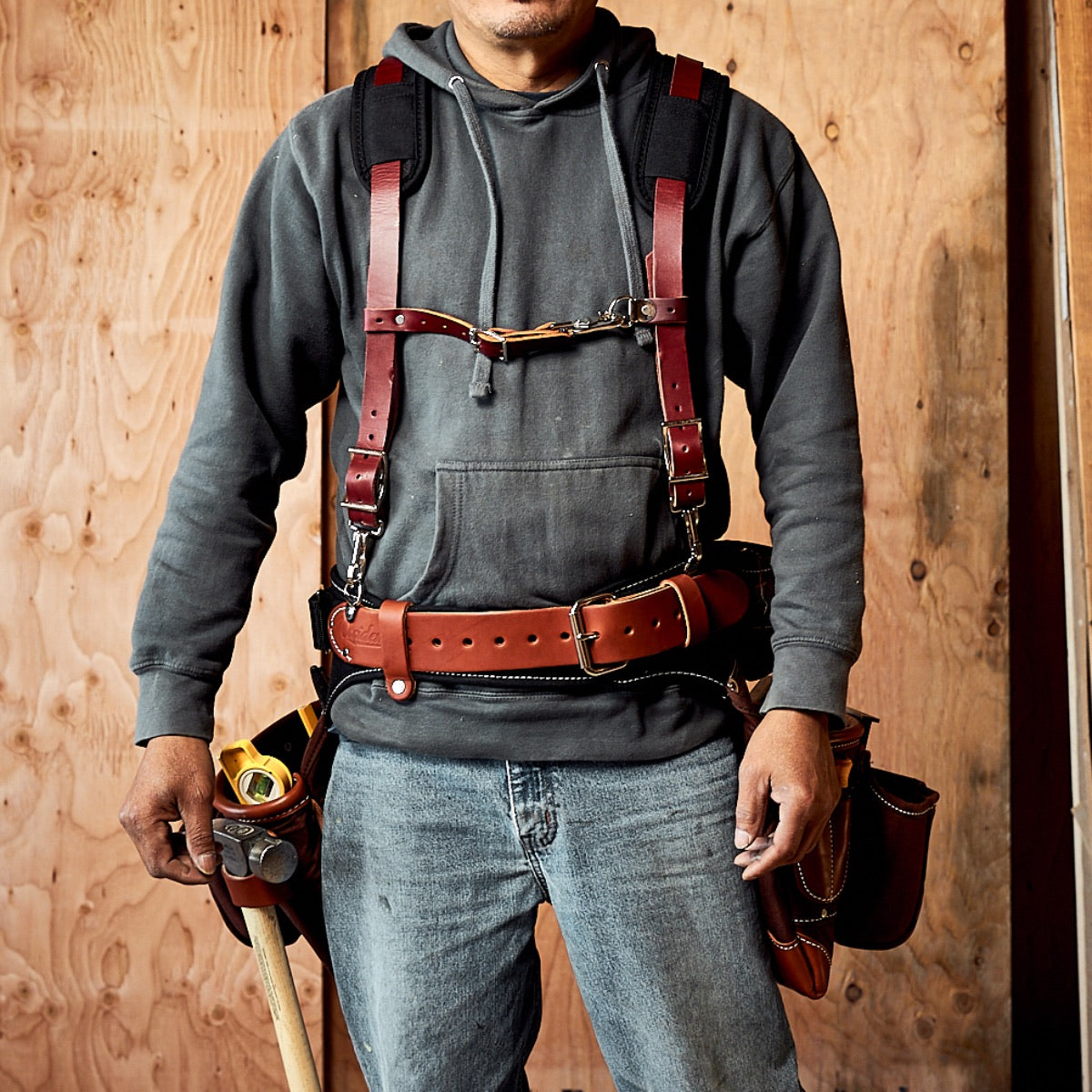
This is where fit makes or breaks the gear. Size your tool belt where you actually wear it. Over your pants, over a regular belt, over whatever you’ve got layered up that season. Sizing off your jeans will get you a belt that doesn’t sit right, and at that point, the material doesn’t matter.
Too tight and it digs in. Too loose and it slides around. Once it’s loaded, every one of those small problems gets louder.
A leather belt that fits properly rides where it should and gets better as it breaks in. A reinforced nylon or hybrid setup can do the same if it’s built well. The goal isn’t lighter. The goal is balanced and stable, so you’re not thinking about your gear all day.
Organization Is a Time Tax
The bags that stay open save you time. That’s the whole argument.
When pockets hold their shape, you’re reaching, not digging. Your hand goes where it’s gone a thousand times before and the tool is there. Fasteners where you need. The pencil is where you left it. You build muscle memory and stop looking down time and time again.
When pockets collapse, you’re using one hand to pry the bag open and the other to fish around. That gets old by the third day, never mind the third year.
It might only cost you a few seconds each reach. Multiply that by hundreds of reaches a day, then weeks, then years. Bad organization is a tax you keep paying.
Leather has the edge here because structured leather bags hold their shape by design. Nylon can do it too if the bag is built with enough internal structure to handle a load.
So What Do You Buy?
Leather makes sense if you want a setup that lasts a long time, holds its structure under a real load, breaks in to you, and looks like a working belt should after a few years. It’s not the lightest option. It’s not always the cheapest. It’s not always easiest on day one. But for daily professional use, a quality leather belt earns its keep. It’s the traditional answer because it’s the proven one.
Nylon makes sense if you want lighter weight from day one, more flex without a break-in period, or you’re working trades where load isn’t the issue. A well-built nylon or hybrid system can absolutely be the right call for the right worker.
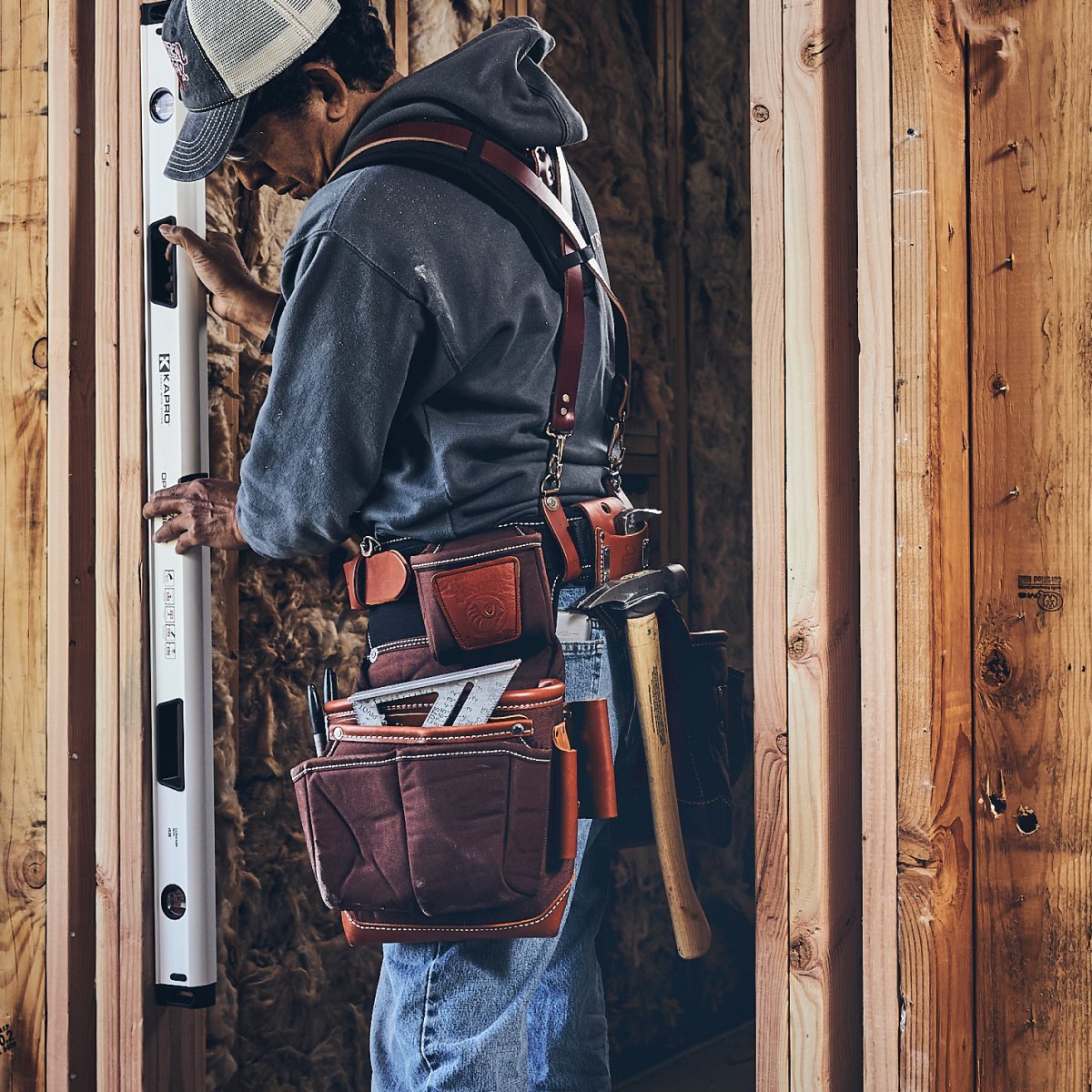
For a lot of pros, the right answer is some of both. Leather where structure and durability earn their place. Lighter materials where weight savings actually help. Reinforcement where the gear takes abuse. Comfort where the body takes the hit.
That’s why we build different systems for different needs. Different jobs, different preferences, different gear, same standard.
The best tool belt isn’t the one made from the “best” material. It’s the one built honestly for the work and the one that disappears on your hips, so you can stop thinking about it and get back to it.
Frequently asked questions
Are leather tool belts worth the higher cost?
For daily professional use, yes. A quality leather belt lasts years longer than cheaper alternatives, holds its structure under load, and breaks in to fit how you specifically work. The upfront cost is higher, but the per-day cost over a career is lower.
Do nylon tool belts sag over time?
Entry-level nylon bags typically do — the pockets lose shape and collapse under the weight of fasteners and tools. Better-built nylon and hybrid systems use internal structure and leather reinforcement at high-wear points to prevent this.
Which is better for electricians — leather or nylon?
Electricians who carry moderate loads and move frequently often prefer nylon or hybrid setups for the lighter weight. Those running heavier loads on long commercial jobs tend to prefer leather for the structure. The work determines the answer more than the trade title.
How long does it take for a leather tool belt to break in?
Most leather belts take two to four weeks of daily use before they fully mold to how you stand and carry. The break-in period is real, but after it, the fit is specific to you in a way that synthetic materials don't replicate.
Can I use a leather tool belt in wet conditions?
Quality leather handles incidental moisture well and can be conditioned to resist it further. Extended exposure to rain or standing water is harder on leather than nylon. For consistently wet environments, a hybrid setup may serve you better.
Ready to find your setup?
Browse leather tool belt sets or nylon and hybrid systems, or start with the Tool Belt Sizing Guide if you're building from scratch.
Share